Honestly described · Free 30-day returns · Free US shipping · Secure checkout
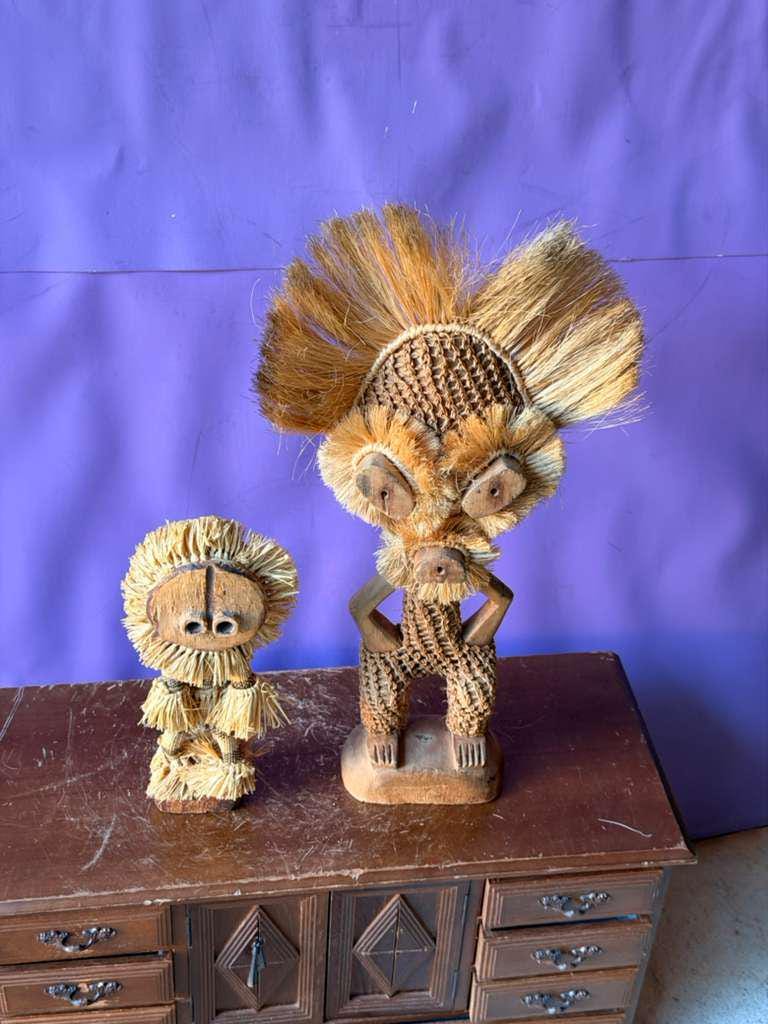
Description Immerse your space in the rich ceremonial heritage of Central Africa with this striking pair of authentic vintage Minganji spirit dancer dolls. Originating from the Pende people of the Democratic Republic of the Congo, these highly sought-after ethnographic sculptures are expertly handcrafted using a combination of hand-carved wood, woven fibers, and natural raffia straw. The duo consists of a larger 14-inch figure and a smaller 8.5-inch companion. Each piece showcases the iconic, highly abstract facial features and entirely textured woven bodies meant to replicate traditional masquerade costumes. The oversized, radiating straw headdresses and heavy fiber layering make this set an incredibly unique and eye-catching addition to any African art collection or global-inspired home decor display. Dimensions Larger Figure: 14 inches Shorter Figure: 8.5 inches Cultural & Historical Context These dolls are meticulously styled after the Minganji (singular: Munganji) ancestor spirit dancers of the Pende ethnic group from the southwestern Democratic Republic of the Congo. In Pende tradition, the Minganji represent the powerful spirits of the ancestors. Unlike other Pende masks made primarily of bare carved wood, the physical Minganji ritual costumes are completely constructed from woven raffia fiber and wild vines, matching the exact textures seen on these figures. The Minganji play a crucial role in Mukanda (male initiation ceremonies) and other major community events. They act as guardians of the sacred rituals, using their intimidating, supernatural appearance to both entertain the village and ward off bad luck, malevolent spirits, and misfortune. These dolls were traditionally created by local artisans as ethnographic representations of these legendary masquerade dancers, functioning as protective charms and symbols of ancestral presence.