Belle Afrik Arts
Losso Tribal Figure - West African Protective Figure
Losso Tribal Figure - West African Protective Figure
Couldn't load pickup availability
Honestly described · Free 30-day returns · Free US shipping · Secure checkout
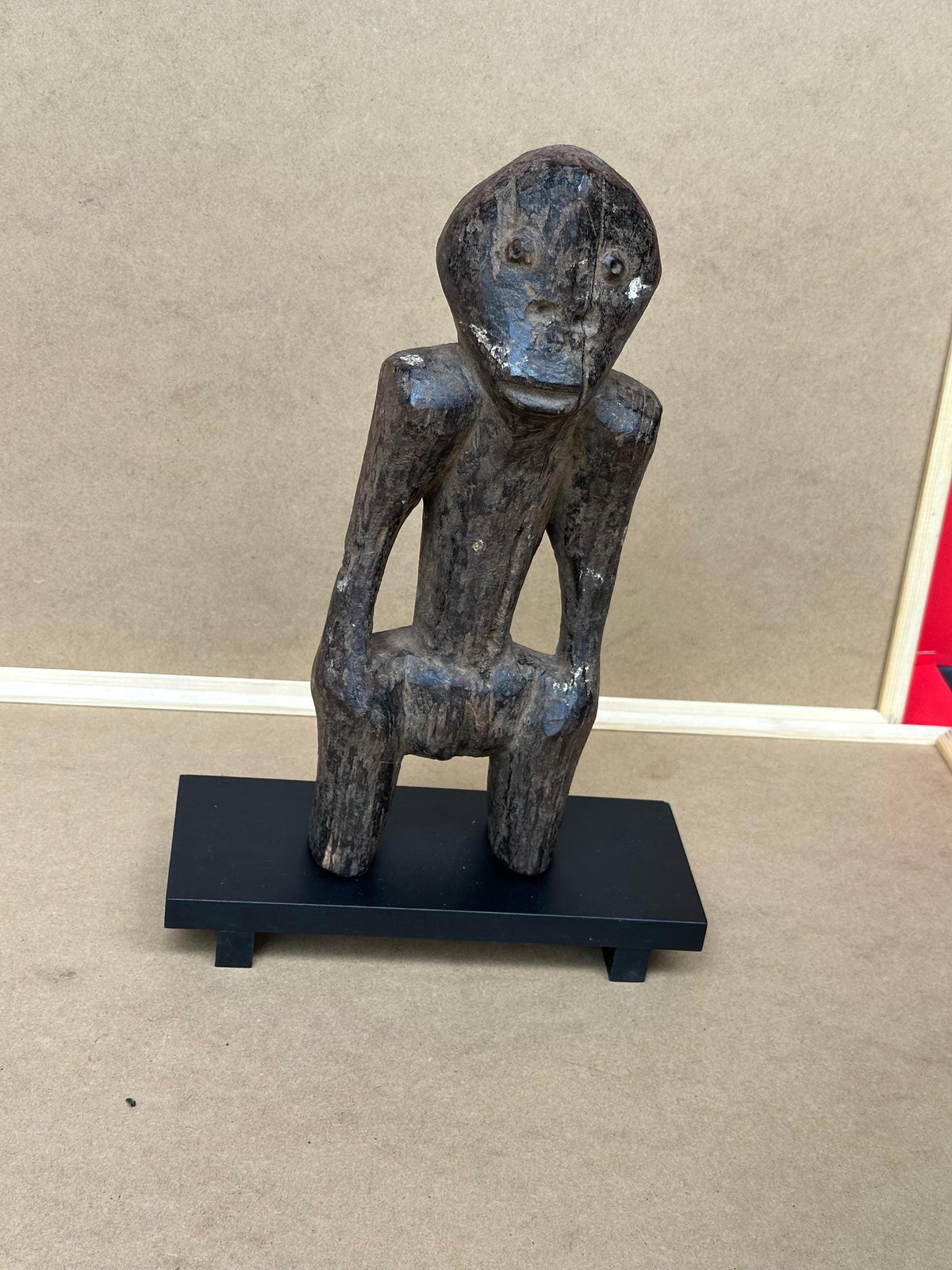
This is a powerful and authentic Losso figure, a vintage ritual object from the Losso (Nawdba) people of Northern Togo, West Africa. Standing at approximately 11.5 inches tall (without the included stand), 5 inches wide, and 3 inches deep, this is a prime example of a tribal spiritual figure. Hand-carved from a dense wood, it features a seated or crouched posture, a distinctively large head, and abstract forms. The figure shows a significant, aged patina with remnants of ritual offerings, indicating a history of authentic use.
Cultural and Historical Significance:
The Losso people hold deep spiritual beliefs where figures like this one play a central role in communicating with the spirit world. This sculpture is a Jup figure, a type of sacred object used in rituals and ceremonies to protect against malevolent forces and illness. Such figures are believed to be inhabited by ancestor spirits (Jup), who serve as powerful intermediaries between the living and the divine. The seated, crouched, or squatting posture is symbolic of a readiness for action and power, often representing a vigilant protective spirit.
The raw and abstract carving style is characteristic of Losso art, where the spiritual essence and power of the figure are prioritized over realistic representation. The surface of the wood, with its dark, encrusted patina and subtle white residue, is a direct result of decades of ritual application of materials, such as millet flour or sacrificial libations. This patina is highly valued by collectors as it authenticates the object's history of ritual use.
This Losso figure is more than a sculpture; it is a profound cultural artifact imbued with a deep sense of purpose and history. It is a testament to the belief systems and artistic expression of the Losso people. A valuable addition to any collection of African tribal art or ethnographic artifacts, this piece is a tangible link to a rich and living spiritual tradition.
Share